Search

Herry Utomo and Ida Wenefrida
More than 500,000 people in Louisiana are afflicted with diabetes, and it is the eighth leading cause of death in the nation, according to the federal Centers for Disease Control and Prevention. This epidemic costs $4.3 billion annually with an additional $1.5 billion in indirect costs from lost productivity, according to the American Diabetes Association. Last year about 1.3 million people with diabetes in the U.S. rationed their insulin to save money, either skipping their prescribed doses, taking less than needed or delaying buying their prescription, according to a study published in the Annals of Internal Medicine. This action could threaten their health and even their lives.
Carbohydrates are the main fuel source for the human body. The brain and muscles thrive on carbohydrates, which are converted to glucose, as an energy source. Every hour the brain uses 5 grams of glucose, or 120 grams of glucose per day. When a person consumes foods that have a high glycemic index, which is often abbreviated to GI, the person’s blood glucose concentration spikes. These spikes place a high demand on insulin. While this is not a problem for healthy people, people with diabetes are unable to produce an adequate amount of insulin.
The GI assigns a value to foods based on how quickly and how high that food can raise blood glucose levels. Conventional rice ranks high on the GI. A high-protein rice with a low GI value developed by LSU AgCenter researchers is allowing people with diabetes to enjoy cooked white rice served in gumbo, jambalaya or boudin, some of the world-famous Cajun foods people in Louisiana love.
Lowest GI, Truly Diabetes Friendly
When foods containing carbohydrates are consumed, the digestive system breaks down the carbohydrates into simple sugars, which enter the blood and become known as blood sugar (blood glucose). As blood sugar levels rise, the pancreas produces insulin, a hormone that prompts cells to absorb blood sugar for energy or storage. As cells absorb blood sugar, levels in the bloodstream begin to fall. But, in people with diabetes, sugar from food remains in the bloodstream instead of entering cells, causing consistently high levels of sugar in the blood. If not treated, their long-term risks include nerve damage, kidney disease and cardiovascular disease. People with diabetes, therefore, are advised to manage their diabetes seriously, including taking medication or insulin injections.
In general, white rice has a GI of 73 and falls into the high GI food group. For that reason, rice is on the list of foods to avoid for people with diabetes. However, this has changed with the availability of the low-GI, high-protein rice. Developed at the AgCenter H. Rouse Caffey Rice Research Station in Crowley, this new rice has a GI of 41, the lowest reported worldwide for commercial rice. With a GI of 41, it belongs to the low-GI food group. Its carbohydrates are digested much more slowly, resulting in significantly lower blood glucose spikes compared to that of a high-GI food. This is a unique property that prevents high levels of spikes from occurring in the first place, and no intervention or less intervention is needed for people with diabetes. This is a game changer that connects rice directly with an event that has a significant health outcome.
The positive health outcome from eating this rice is not limited to people with diabetes but also to non-diabetics. As the high-quality carbohydrates from this rice are broken down slowly by the body, the slow process feeds a steady supply of fuel into the body, providing sustained energy, which leaves a person feeling fuller for a longer period of time and reducing cravings and the need to overeat. This specific benefit can help healthy people, as well as people with diabetes, to manage healthy body weight and control obesity.
Highest Protein, Gluten-free and Good Taste
As the name suggests, the low-GI, high-protein rice offers a unique combination of two valuable traits. The high-protein component provides another health benefit that is different from the low-GI component. The low-GI, high-protein rice has a protein content of 10.4%, the highest reported in the world for commercial rice. Rice in general has a protein content of 6% to 7%. The increased amount of protein per serving benefits people who are looking to moderate their meat consumption by adopting more plant-based lean protein in their diets. Athletes who need a rapid conversion of food to energy and high protein intake for their activities can also benefit from this rice. About 18 million Americans have gluten sensitivity, and 3 million have celiac disease, a chronic disease that damages the small intestine and is triggered by eating foods with gluten. They can benefit from this rice. The low-GI and high-protein rice is currently marketed as Parish Rice by a Louisiana company and Cahokia Rice by a mill in Illinois. Consumer feedback has been very positive, and many love how the rice tastes.
More Protein-Dense Lines With Identical Taste and Grain Quality
The new lines for the next generation of low-GI, high-protein rice have grain quality specifications nearly identical in taste and quality to the previous line. Advanced line LGR-21009 has a GI of 40, and its protein content has improved to 11.9%. It has an excellent grain appearance and a 10% yield increase compared to the previous line. The advanced lines have been evaluated in multiyear field trials. Globally, more than 400 million people are afflicted by diabetes, and more than 750 million people are affected by protein malnutrition. With about half of those populations in rice eating countries, the low-GI and high-protein rice can be a game changer in providing critical health benefits to help manage diabetes, obesity and malnutrition.
Herry Utomo is the F. Avalon Daggett Endowed Professor based at the H. Rouse Caffey Rice Research Station in Crowley. Ida Wenefrida was an associate professor at the Rice Research Station. She passed away in March of 2023. Read more about her life here.
This article appears in the summer 2023 edition of Louisiana Agriculture magazine.

Parish Rice, grown and marketed by Eunice-based Fruge Farms can now be found on supermarket shelves throughout the central Gulf Coast Region. The rice is milled at the Falcon Rice Mil, located in Crowley. Photo by Olivia McClure
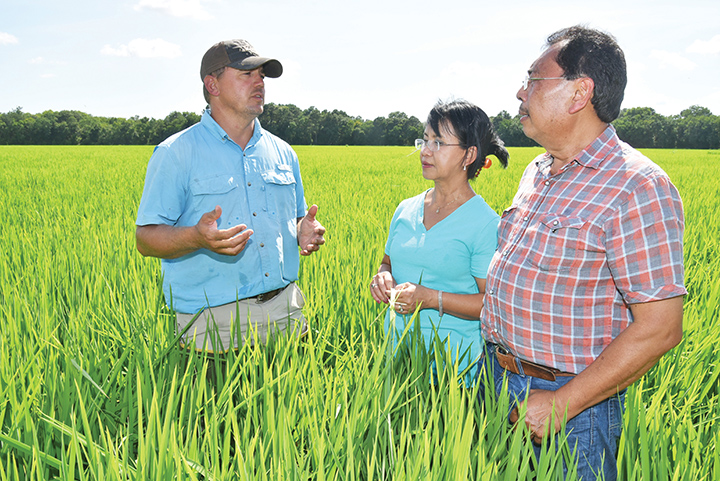
Eunice-based rice farmer Mike Fruge (left) discusses rice development with Frontière's developers Ida Wenefrida and Herry Utomo. Photo by Bruce Schultz