Search
Authors: Brooke King, Aaron Ashbrook, Christine Gambino, and Teague O'Mara
Bats play a vital role in keeping ecosystems healthy, but with natural habitats disappearing, they need our support more than ever. By offering food, water, and shelter, you can create bat-friendly habitat right in your own backyard. In return, insectivorous bats will eat many of your unwanted yard and garden pests.
White-Nose Syndrome (WNS), caused by the fungus Pseudogymnoascus destructans, is a serious disease that originated in Europe and has spread rapidly in North America in recent years. The fungus disrupts bats during hibernation by waking them prematurely, interfering with their ability to regulate body temperature. Once active, bats burn through their stored energy reserves in search of food that is unavailable during winter. This often leads to exhaustion, starvation, and death.
Protecting bats from White-Nose Syndrome is critical not only for preventing species decline but also for preserving the many ecological services bats provide. From controlling insect populations to supporting healthy ecosystems, bats play an essential role in maintaining environmental balance.

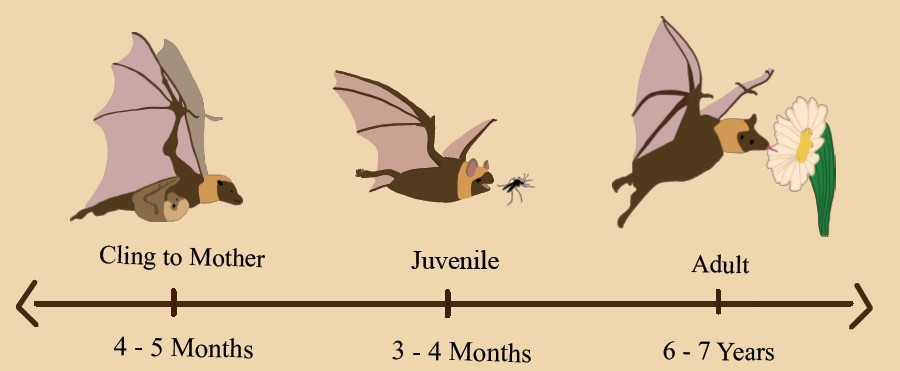
A broad summary of a bat’s life cycle can be seen on the timeline below. Starting as pups, bats take 4-6 weeks to develop the ability to fly. Bats will enter structures using existing gaps they can find. This includes cavities in structures, which causes unwanted human and bat interactions.

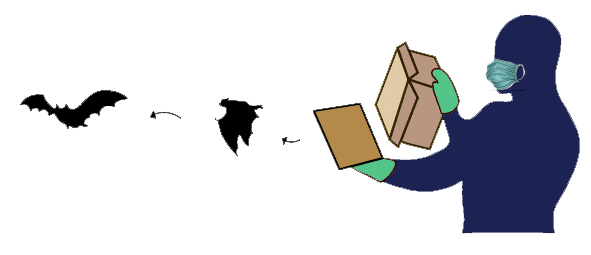
If you find a bat inside of your home, put on personal protection equipment such as gloves and a mask. To remove the bat, cover the bat with a box and slide another piece of cardboard between the box and the wall to safely secure the bat without direct contact.
Take the container outside and release the bat from a height of 6 feet or higher. Bats take off flying by gliding, so do not put them on the ground. If multiple bats are roosting in your house, seek professional assistance to help remove the bats.
Bats are capable of vectoring disease to humans. If bitten by a bat, wash out the wound and seek immediate medical attention. If you suspect that a bat has rabies, contact the LSU’s Veterinary Clinic or Louisiana Department of Wildlife and Fisheries.
LSU Department of Entomology Insect Identification Services
404 Life Sciences Building Louisiana State University Baton Rouge, LA 70803
LaHouse Research and Education Center
3622 Gourrier Ave, Baton Rouge, LA 70820
225-578-7913
Bat Fact Sheet Publication
Louisiana Department of Wildlife & Fisheries
Teague O'Mara
Director of Conservation Evidence at Bat Conservation International
tomara@batcon.org