Search
Each spring, South Louisiana experiences an increase in caterpillar activity, particularly around our stately, oak trees. As these caterpillars mature and begin searching for places to pupate, they often fall or crawl onto sidewalks, patios, driveways, and lawns. This movement brings them into contact with people, young children, and pets. While many caterpillars are harmless, a few species have stinging hairs that can cause painful reactions. Understanding which species are common in our area can help homeowners identify what they are seeing and determine whether any action is needed.
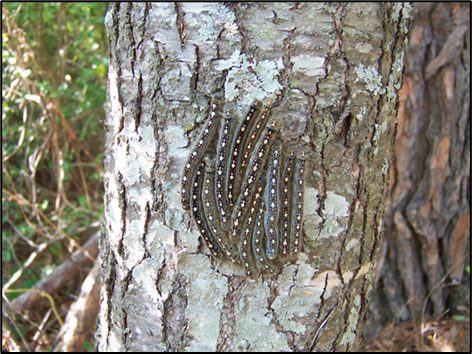
One of the caterpillars frequently encountered is the tent caterpillar. These caterpillars can grow up to two inches long and are easily recognized by their fuzzy bodies and colorful stripes with silver “keyhole” spots. They often construct conspicuous web-like tents in the branches of trees. Host plants include sweet gum, birch, cherry, elm, willow, and oak trees. Although their activity can look alarming, tent caterpillars rarely cause long-term harm to healthy trees. Their presence is mostly a temporary nuisance.
Another species commonly found beneath oak trees is the buck moth caterpillar. This caterpillar is dark purple to black in color, has a reddish head, and is covered with small white spots. Buck moth caterpillars occur in large numbers during peak season, which greatly increases the likelihood of accidental contact. They are well known for their painful sting, and people often encounter them after they fall from oak branches onto outdoor surfaces.

The tussock caterpillar is also frequently observed in South Louisiana landscapes. It has a striking appearance with black and yellow stripes running the length of the body and a prominent red spot on the head. Numerous tufts of hair, including four distinct white “paintbrush” tufts on its back, give it a spiky and dramatic look that suggests antennae and a tail. This species is not limited to oak trees and will feed on a wide range of deciduous and coniferous hosts.
The painful sting associated with some caterpillars is caused by venom-filled spines on their bodies. When these spines come into contact with skin, they can puncture it and release venom, causing immediate pain along with localized redness and swelling. The reaction is similar to that of a bee sting, and individuals who are sensitive to insect toxins may experience more intense symptoms.
For most caterpillar species described here, chemical control is generally unnecessary. Occasional caterpillars can simply be knocked to the ground and destroyed if needed. Buck moth caterpillars are the exception because they often appear in large groups. When their numbers become excessive, some homeowners may choose to treat infested trees. Anyone considering chemical control should consult the Louisiana Insect Pest Management Guide for recommendations on insecticides and proper application rates. As always, label directions must be followed carefully when applying any pesticide.
Buckmoth caterpillar (left) and tent caterpillar (right). Photos courtesy of the LSU AgCenter.
The LSU AgCenter provides equal opportunities in programs and employment. Find detailed information at www.lsuagcenter.com/eeo.
Should you need any ADA accommodations, please contact Schyler Thibodeaux at (225) 621-5799 no later than 10 days prior to the event.