Search
Meggan Franks, Zito-Hebert, Christina, Kleinpeter, Shelly

Meggan Franks, Asia Delasbour, Christina Zito-Hebert, Shelly Kleinpeter, Madeline Smith and Mayar Nickols
In Louisiana, 4-H isn’t just about blue ribbons. For thousands of youths across the state, it’s also where they learn how to lead, communicate and, perhaps most importantly, keep going when things get hard. A five-year look at Louisiana’s 4-H Honor Cord program shows that teens involved in 4-H graduate with more than memories and awards. They leave with real-world readiness — and grit.
The Louisiana 4-H Honor Cord program recognizes high school seniors who demonstrate sustained commitment to 4-H. To earn the cord, youth must participate in 4-H for at least three years and complete at least one state-level activity. As part of the application, seniors are asked to reflect on what they learned through their 4-H experiences. Their answers tell an important story about perseverance.
Over the past five years, more than 2,000 Louisiana 4-H seniors have submitted reflections describing how 4-H shaped their growth. When those responses were analyzed, eight key areas of career development appeared repeatedly: leadership, communication, responsibility, life skills, personal growth, community engagement, career exploration and grit. In other words, young people consistently described 4-H as a place where they learned not just what to do, but how to approach life.
What Is Grit?
Research describes grit as a combination of perseverance and passion for long-term goals. It’s the ability to keep working when things get difficult, to push through setbacks and to stay committed over time. When reviewing the 4-H reflections, that idea surfaced frequently. 4-H youth described working hard, sticking with projects, overcoming obstacles and pushing themselves to improve.
Many participants described staying dedicated to projects over multiple years, including raising livestock, leading clubs, completing service projects or preparing for competitions.
Learning Through Failure
Several reflections emphasized learning from setbacks and continuing forward rather than quitting. One 4-H member wrote, “4-H taught me to keep trying even when I failed.” Another reflected on the discipline they developed over years of participation: “I learned to stick with my projects, even when they got tough.”
By the Numbers
To better understand the themes in the reflections, responses were coded and grouped into major categories. The results provide a clear snapshot of how youth believe 4-H prepared them for life after high school.
The most frequently mentioned area was professional skill development, which included communication, teamwork, public speaking and problem-solving. Many students described learning how to present ideas, work with peers and organize projects.
Leadership followed closely behind. Nearly half of participants said 4-H helped them develop leadership and responsibility through roles such as club officers, committee leaders and project mentors.
Youth also frequently connected their experiences to future career goals. Many described how 4-H helped them explore professions, build resumes and prepare for college or the workforce. But woven throughout these responses was another powerful theme: perseverance. Of all reflections, nearly 1 in 10 youth explicitly described experiences that built grit and persistence.
Top Skills Youth Say They Gained Through 4-H
Why It Matters
In today’s workforce, technical skills matter. But so do persistence, adaptability and the ability to learn from failure.
Employers consistently rank qualities such as communication, teamwork and problem-solving among the most important skills for new hires. Just as important are traits like reliability, determination and being resilient. These are exactly the kinds of habits young people described learning through Louisiana 4-H.
Through hands-on projects, mentorship from volunteers and opportunities to lead and compete, 4-H provides something many young people don’t always experience elsewhere: real responsibility. Participants plan meetings. They raise animals. They present projects. They lead teams. They serve their communities. And sometimes they fail. But they also learn how to try again. One student wrote: “4-H showed me how to persevere when things don’t go as planned.” And another wrote, “Through 4-H, I developed the determination to see things through.”
Looking Ahead
Louisiana 4-H and the 4-H agents across Louisiana do more than teach practical skills. They create environments where young people are encouraged to try, fail, learn and grow. When Louisiana youth are supported, challenged and believed in, they develop the confidence to lead and the perseverance to keep going. In other words, they develop grit. This is exactly the kind of preparation today’s young people, and tomorrow’s workforce, need.
Meggan Franks is an assistant professor for extension at LSU AgCenter LaHouse Research and Education Center. Asia Delasbour, a graduate student at the University of Maryland, was previously an LSU College of Agriculture student in the department of Agricultural Extension Education and Evaluation. Christina Zito-Hebert is the college and career readiness specialist for Louisiana 4-H Youth Development. Shelly Kleinpeter was the creative content manager for LaHouse and is now the social media coordinator for LSU AgCenter Communications, and Madeline Smith and Mayar Nickols are student workers at LaHouse.

Young people work on hands-on projects and learn to solve problems during their time in 4-H. Provided photo

Young people work on hands-on projects and learn to solve problems during their time in 4-H. Provided photo
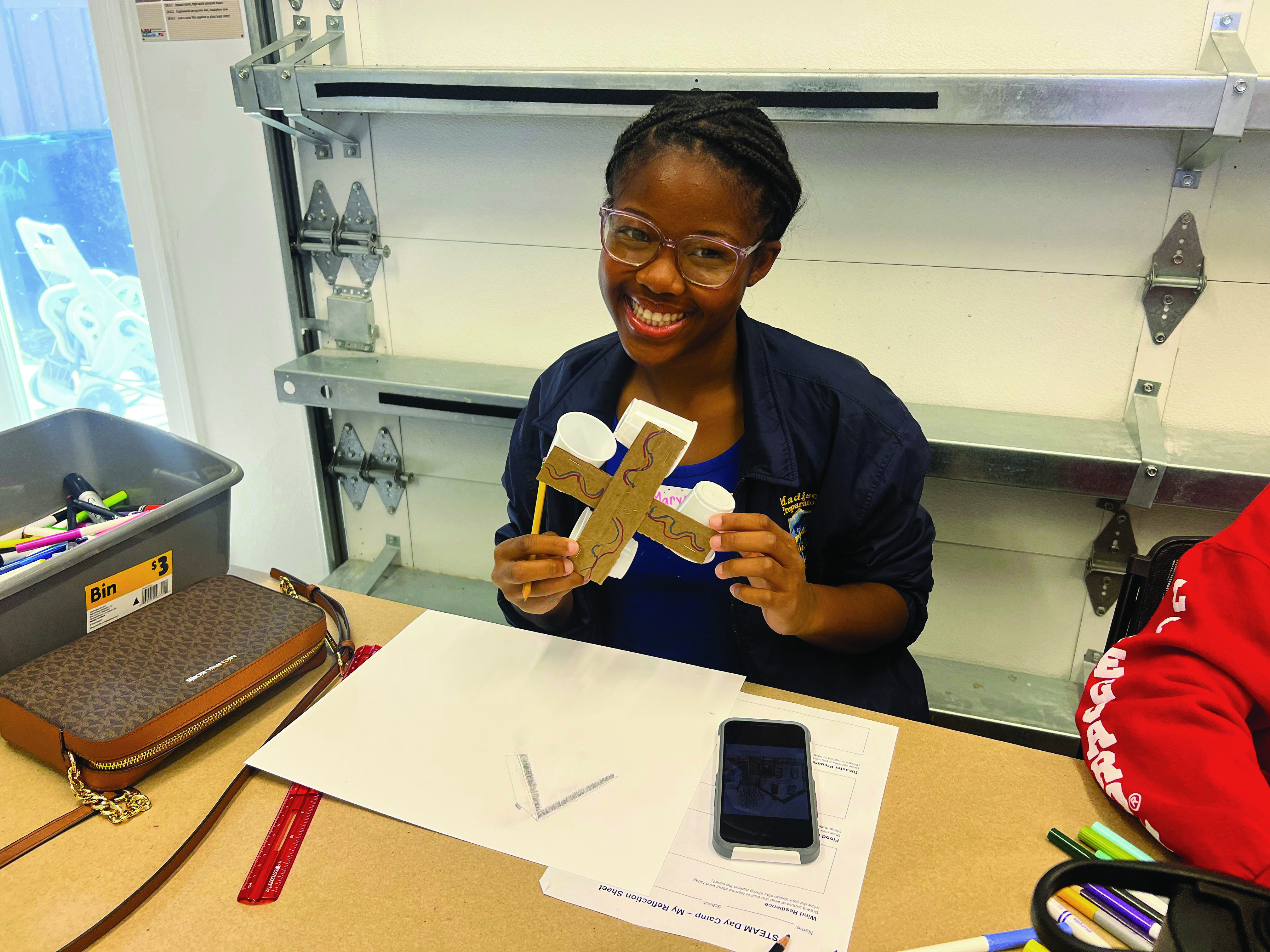
In 4-H clubs, young people learn to build with their hands, working on projects such as this wind-measuring instrument. Provided photo
Teaching Grit: 4-H’ers Look Back at Impactful Lessons
Interviews by V. Todd Miller
Curstyn Oncale
A 2024 graduate of Thibodaux High, Oncale attends LSU and majors in agricultural and extension education with a concentration in teaching in formal education.
 What skills did you learn from 4-H that are useful as a young adult?
4-H taught me many skills that I use as a young adult, especially confidence in public speaking, communication and even cooking skills. It also helped me learn responsibility and how to work with people from different backgrounds. I’m thankful for everything 4-H taught me because it played a big role in shaping who I am today and gave me skills I know will continue to benefit me in the future.
How did 4-H challenge you?
4-H challenged me to step outside of my comfort zone in the best way. When I first started, I was shy and not very confident speaking in front of others. Through competitions, leadership opportunities and meeting new people, I was pushed to grow and try things I wouldn’t have done otherwise. Over time, those challenges helped me become much more confident and comfortable in myself, and I’m grateful for that growth.
Did your 4-H experience help you overcome any particular challenge?
Yes, 4-H played a big role in helping me figure out what I want to do in the future. Through opportunities like leadership roles, showing rabbits and working with others, I was able to discover my interests and strengths. Those experiences helped me realize how much I enjoy teaching, communicating and working in agriculture. 4-H helped guide me toward my goal of becoming an agricultural education teacher, and I’m very thankful for the direction it gave me.
Shaohannah Martin
A 2023 graduate of Raising Arrows Christian Academy, Martin attends LSU and majors in animal sciences with a concentration in animal production and a minor in youth development and extension.
 What skills did you learn from 4-H that are useful as a young adult?
I think the biggest skill I learned was time management. By learning how to manage my time in high school, I was able to navigate college more successfully. It made the transition to college smoother, and I gained more confidence in myself.
How did 4-H challenge you?
I think the biggest challenge it gave me was learning responsibility. You’re responsible for your livestock projects and being able to understand that raising a project that is completely dependent on you really helped me understand the importance of consistency and just showing up and taking care of my animal. No one is going to be there holding your hand.
Did your 4-H experience help you overcome any particular challenge?
I was a really shy girl growing up, and by taking on leadership opportunities, I was able to build a stronger foundation for myself, be more confident and talk to people to give presentations, be quick on my feet and overall become a better communicator and public speaker.
V. Todd Miller is a writer, editor and photographer in LSU AgCenter Communications.
These articles appeared in the spring 2026 edition of Louisiana Agriculture.