Search


Download Publication ID: 3957-C
Meat science is the study of how muscle and other animal tissues are transformed into meat. This field encompasses everything from livestock production to the final stages of meat preparation for consumption. Not limited to muscle biology, meat science also includes processing, safety, quality and consumer satisfaction.
Meat refers to edible animal tissues, including both fresh and processed products. Beef is classified as a type of red meat, alongside pork, lamb, mutton and veal. Beef products may consist of various tissue types such as muscle, fat (adipose) and connective tissues.
A carcass primarily consists of muscle, bone and fat. Each of these components contain multiple types of tissue, and their proportions influence meat quality and leanness. Cattle have over 600 muscles, each differing in shape, size and function. The role of a muscle determines its structure and characteristics.
Muscles are wrapped in layers of connective tissue that extend inward, surrounding individual muscle fibers. These fibers, also called myofibers or muscle cells, make up 75% to 92% of the muscle’s volume. The rest includes connective tissue, blood vessels, nerves and extracellular fluid. Muscle fibers are grouped into bundles, and the size and arrangement of these bundles affect the texture and tenderness of cooked meat.
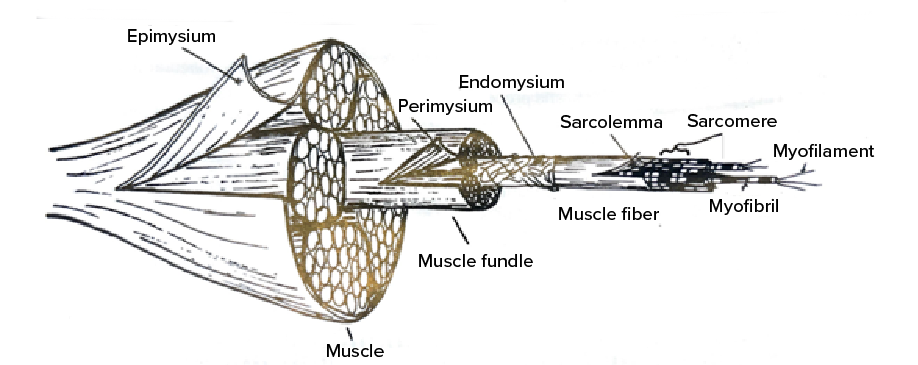
Diagrammatic representation of macroscopic and microscopic muscle structure. Illustration by B.B. Chrystall, University of Missouri
Carcass composition varies due to genetics, nutrition and environmental conditions. Different cattle breeds grow and mature in distinct ways, producing carcasses with breed-specific traits. For example, in beef cattle, the heritability of fat thickness is estimated at 38%, while the ribeye area (longissimus dorsi) has a heritability of about 70%.
Not all animals within a breed mature at the same rate. “Physiological age” refers to an animal’s developmental stage based on body function and structure, rather than chronological age. While genetics set the potential for growth, factors like diet and environment determine how much of that potential is realized.
Meat quality traits, such as tenderness, juiciness, flavor and color, are influenced by changes that occur after slaughter. These changes also affect how meat behaves during processing, including its ability to bind, emulsify and retain moisture.
Stress before slaughter can impact meat quality. When animals experience high stress, their muscles require more blood flow to support increased activity. If the circulatory system cannot meet this demand, it can lead to meat that is dark, dry or sticky — commonly referred to as “dark cutters.”
Standardized cutting and naming of meat cuts is essential for consistent quality and proper usage. Cuts vary in tenderness and fat content. The most tender cuts typically come from the rib and loin areas, which support the body rather than facilitate movement. Cuts from the legs, which are used for locomotion, tend to be less tender. Muscle movement requires repeated stretching and relaxation of the muscle fibers, resulting in reduced tenderness.
Due to the size of beef carcasses, they are split into halves and then quartered into forequarters and hindquarters. These quarters are further broken down into primal cuts, which include the chuck, rib, short loin, sirloin, round, flank, short plate, brisket and fore shank. Subprimal cuts, such as rib roasts, are derived from these larger sections and are commonly sold at retail.
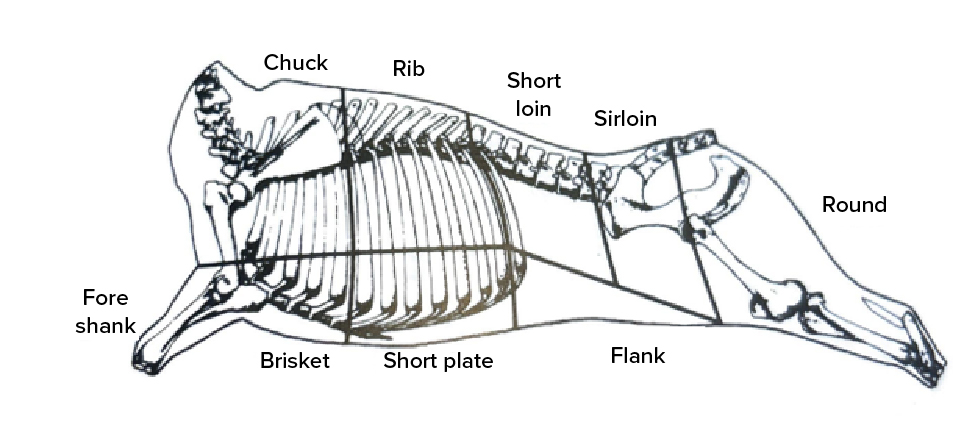
Diagram of beef carcass illustrating wholesale cuts in relation to the skeleton. Illustration by the National Livestock and Meat Board
Cooking methods have evolved through generations of culinary experience. Understanding how time and temperature affect meat helps ensure optimal flavor and texture. Heat can either tenderize or toughen meat depending on the cut and cooking method.
Dry heat methods, like grilling, oven roasting and broiling, are best for tender cuts such as steaks and chops. These methods create rich flavors and browning due to high surface temperatures. Examples of recommended cuts for dry heat include roasts from the rib, short loin, sirloin and selected round areas.
Moist heat methods, such as braising, pressure cooking and stewing, are ideal for tougher cuts with more connective tissue. These methods add moisture and help break down tough fibers. Cuts suited for moist cooking include the chuck, round, fore shank, brisket and short plate.
In addition to proper cooking methods, internal meat temperature plays a role in palatability and ensures food safety. According to U.S. Department of Agriculture guidelines:
Understanding the fundamentals of meat science provides a foundation for appreciating how animal biology, postmortem changes, carcass composition and proper cooking methods work together to influence the quality of the meat we consume. From the genetic and environmental factors that shape carcass traits to the anatomical differences that determine tenderness and appropriate cooking techniques, each stage in the journey from livestock to plate plays a critical role in ensuring safety, palatability and consumer satisfaction. By recognizing how muscles function, how stress affects meat quality and how different cuts should be prepared, producers, processors and consumers alike can make informed decisions that enhance both the eating experience and the overall value of meat products.
Aberle, E., Forrest, J., Gerrard, D., Mills, E. Principles of Meat Science, Fourth Edition. 2001.
United States Department of Agriculture – Food Safety and Inspection Service. Safe Minimum Internal Temperature Chart. 2025.


 P3957-C Understanding the Fundamentals of Meat Science_AG0726pdf / 0.41MB