Search
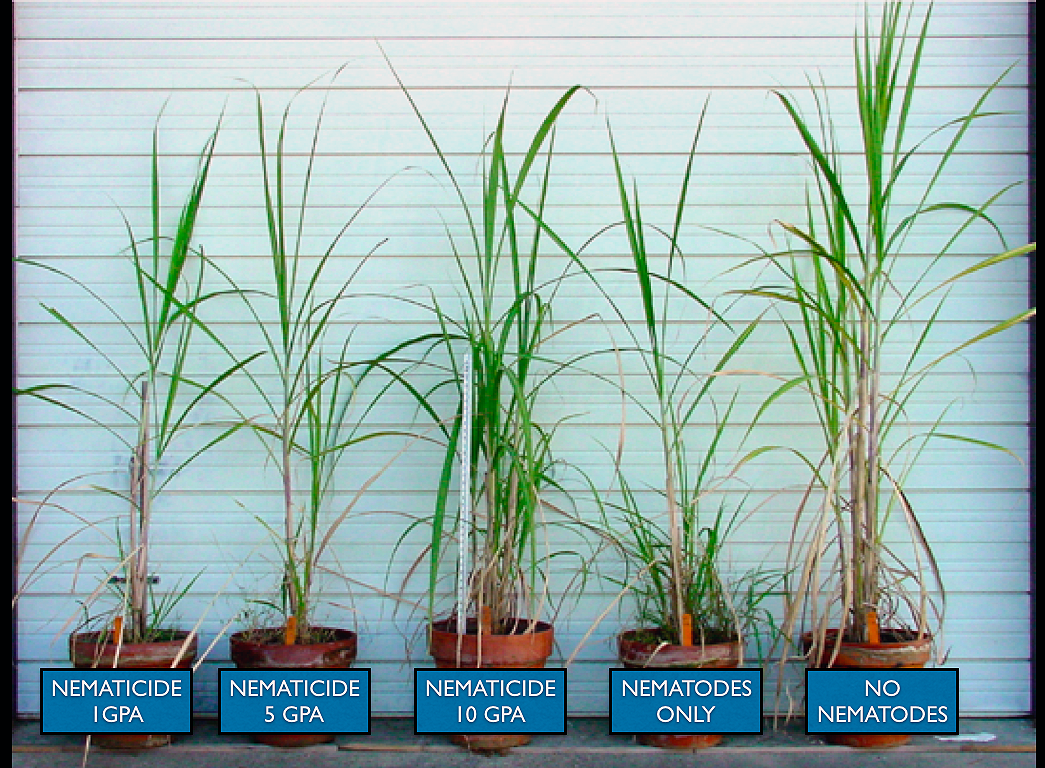
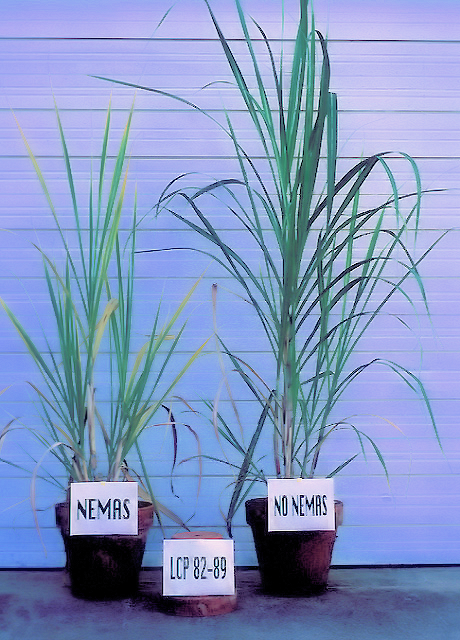
Figure 1. Damage by high populations of plant-parasitic nematodes on the image to the left and the impact of a nematicide on sugarcane growth in the greenhouse on the image to the right.
Sugarcane Nematodes
There are a number of plant-parasitic nematodes associated with sugarcane in Louisiana. Southern root-knot, lesion, ring, stubby-root, spiral, lance and stunt are some of the most common types present. Although the root-knot and lesion nematodes are generally considered to be the most damaging species, complexes of many different species together can also cause damage to sugarcane. The nematodes that attack sugarcane cause damage to the plants roots. These damaged roots can become dark, discolored, and begin to decay. Roots may also be sparse and thin when compared to a healthy root system. Root-knot nematode can cause very small galls on the roots. These damaged roots impact the above-ground parts of the plant and result in thin and short plants, reduced internode numbers, and yellowing of the leaves.
Losses from plant-parasitic nematodes in sugarcane have averaged from 5-15%. Soil texture is an important component of damage by nematodes with lighter, sandier soils being the most severely impacted and heavier silts or clay soils have very little damage from nematodes. Some nematodes like Southern root-knot and stubby root nematodes really prefer only sandy soils. Crop rotation between crops can be very helpful particularly if a non-host crop is used against the major nematodes present. Since sugarcane is a grass type plant, be sure to use something different like soybean or other broad-leaf cover crops. Where root-knot nematode is present, be sure to use a resistant soybean variety. Our options for nematicides in sugarcane are very limited.