Search

Luke Stamper, Assistant Extension Professor, Extension Wildlife Specialist, LSU AgCenter
Kim Marie Tolson, Professor Emerita, School of Sciences, University of Louisiana Monroe
The New World screwworm (NWS), a parasitic fly named for the distinctive screw-like appearance and feeding behavior of its larvae (maggots), has been a historically devastating pest of white-tailed deer, other wildlife, domestic livestock and occasionally humans in the United States, with documented cases dating back to the 1840s. The historic range of this parasite covered states in the southwest U.S., then human-induced dispersal carried it to the southeastern states where NWS became established by the 1930s. Mainly known for its effects on the livestock industry, records of screwworm infestations in white-tailed deer are cause for much concern to hunters. Some of the earliest accounts from the pre-eradication era reported that NWS was responsible for substantial mortality among white-tailed deer fawns in south Texas during years with mild winters.
Relief came in the 1950s when a new technique that involved the release of sterile male flies to breed with wild female flies resulted in the production of unfertile eggs and, ultimately, in population collapse. This sterile insect technique (SIT) led to the eradication of the NWS across all of the U.S. by 1966. Several isolated NWS incursions have occurred since the declaration of eradication. Most notably was the 2016 NWS outbreak that produced devastating effects on Florida Key deer, an endangered subspecies of the white-tailed deer. It required approximately seven months of intensive SIT implementation to suppress the NWS outbreak in the Florida Keys. Although eradication was ultimately achieved, substantial mortality occurred before the outbreak was suppressed, with an estimated 15% of the total Key deer population and a large proportion of the adult male segment reportedly lost to infestation. This event highlighted the potential for NWS to cause meaningful population-level impacts in free-ranging deer. Unfortunately, in June 2026, NWS reemerged in the United States across a broader geographic area, with confirmed cases reported in Texas and New Mexico.
The New World screwworm (Figure 1A) is the larval form (maggot) of the New World screwworm fly (Cochliomyia hominivorax), also known as the primary screwworm fly (Figure 1B). What sets this blowfly apart from other types of blowflies is that their larvae feed on living tissue of mammals and birds. The maggots have sharp mouth hooks that are used to tear into the flesh and, if left untreated, can result in death of the host.
External features of the NWS resemble that of a blowfly commonly found in Louisiana, the secondary screwworm (Cochliomyia macellaria). Both have large orange eyes and a metallic blue-green body possessing three black, longitudinal stripes. Distinguishing between the two species should be left to a trained individual, as the defining difference is the length of the central stripe in the NWS. The maggots of secondary screwworms feed on the decaying flesh of dead organisms as their mouthparts are unable to penetrate healthy, living tissue. Importantly, NWS and secondary screwworm species may co-occur within the same wound, further emphasizing the need for accurate identification by a trained professional.
The life cycle of the NWS (Figure 2) consists of four stages (egg, larva, pupa, adult), is temperature dependent and can complete in as little as three weeks under optimum conditions. Adult NWS flies mate within one to three days after emerging from their pupae. Male flies may mate with multiple females, but females are known to breed only once in their lifetime. Mated female flies are attracted to odors produced by open wounds or mucous membranes of warm-blooded animals to lay (oviposit) their eggs. Females lay multiple batches of 200 to 300 eggs and can produce up to 3,000 eggs in their lifetime. The eggs will hatch into maggots/larvae within 12 to 24 hours.
The appearance and feeding behavior of the larval form gives rise to the common name of this destructive pest. Segments on the body of maggots resemble threads on a screw. Once hatched, they adopt a head-down position and begin feeding, creating a screw-like hole. This behavior creates a rapidly expanding wound as living tissue is consumed.
The larval stage lasts approximately five to seven days, during which larvae feed on living tissue before maturing, exiting the wound, dropping to the ground and burrowing into the soil to pupate. Adult flies emerge from the pupae in six to eight days and soon thereafter begin searching for a mate.
Warmer temperatures and higher humidity decrease the time spent in all stages and shorten the life cycle, while colder temperatures lengthen the life cycle and restrict range expansion. Cold winter temperatures are an important factor in controlling NWS as soil temperatures below 46 F result in death of pupae.
It is widely recognized that NWS can infest a broad range of warm-blooded animals, including both domestic livestock and free-ranging wildlife. Among wildlife species, white-tailed deer are of particular concern due to their natural behavior and life history that frequently produce the open wounds and exposed mucous membranes required for NWS infestation. The parasite’s life cycle is closely tied to these entry points, as adult flies deposit eggs on or near wounds where larvae subsequently feed on living tissue. In deer, suitable infestation sites may result from rut-related fighting injuries, antler casting, damaged velvet, fawning-associated umbilical tissue, predator or vehicle-related trauma, fence and brush abrasions, and even minor skin openings caused by ticks or other ectoparasites. These frequent and seasonally predictable sources of injury make white-tailed deer especially vulnerable if NWS becomes established within a landscape.
Rut-related aggression during fall and winter among adult bucks increases susceptibility to NWS infestation through sparring and fighting that commonly produce puncture wounds, lacerations, antler trauma, facial and ocular injuries, neck wounds and tissue damage prone to abscess formation. During the 2016 Florida Key deer outbreak, Parker et al. (2020) reported that mortalities were concentrated among adult males and were largely associated with open sparring wounds acquired during rutting behavior.
Antler shedding during late winter creates a period of elevated susceptibility in bucks because detachment of the antler exposes the pedicle, leaving a fresh, vascularized wound surface until healing occurs. This exposed tissue can attract female NWS flies and provide a suitable site for egg deposition and increasing risk of infestation in individual bucks.
Velvet injuries during spring and summer may increase vulnerability because damaged velvet is highly vascular, often bleeds readily and can create open wounds that are susceptible to larval infestation.
Fawns birthed during summer may be especially vulnerable to NWS infestation at the umbilicus, or navel region, as noted by the U.S. Centers for Disease Control and Prevention and the U.S. Department of Agriculture. The umbilicus is located along the ventral midline of the abdomen and represents the site where the umbilical cord connected the developing fawn to the placenta. Immediately after birth, this connection is severed, leaving a small area of exposed, moist and healing tissue. Because NWS flies are attracted to open wounds, mucous membranes and the umbilical tissue of newborn animals, this freshly exposed site may provide a suitable location for egg deposition until the tissue dries, seals and heals.
Small environmental wounds are common in white-tailed deer and can provide suitable entry points for NWS infestation. These injuries may result from routine movement through dense brush, exposure to biting insects and ectoparasites, fence crossings, predator encounters or other sources of minor trauma. The NWS wound-dependent life cycle aligns closely with the frequent, low-level injuries experienced by white-tailed deer making even minor abrasions, punctures, or tick-associated skin openings biologically important if NWS flies are present.
White-tailed deer life history events occurring throughout the year can increase susceptibility to NWS infestation. Understanding regional deer biology and the seasonal timing of these risk periods can help land managers and hunters more effectively monitor suspicious wounds, recognize potential infestations, and report concerns promptly.
One of the most valuable tools in deer management is annual herd monitoring through trail cameras, field observations with optics and biological data collected at the skinning shed. These same practices can also serve as practical surveillance tools for detecting NWS in white-tailed deer and other wildlife. Unlike livestock, free-ranging wildlife cannot be easily gathered, restrained, inspected or treated, making early detection of NWS especially challenging. Because deer are naturally elusive and often avoid human contact, hunters and landowners play a critical role in surveillance by documenting abnormal wounds, visible maggots, unusual behavior or unexplained mortalities observed through cameras, harvest inspections and routine time spent in the field with quality optics.
Trail cameras are part of just about every hunter’s tool bag and the most practical way to monitor deer for signs of NWS. Cameras allow repeated observations of deer at feeders, food plots, mineral sites, water sources, trails, fence crossings and scrapes. It is specifically recommended that landowners and hunters use game cameras and report deer with suspicious wounds.
Binoculars and spotting scopes are valuable monitoring tools as they allow hunters to evaluate wildlife from a safe distance without approaching, disturbing or increasing stress on potentially sick animals. This is especially useful when assessing deer for abnormal behavior, visible wounds, swelling, drainage or other signs that may warrant documentation and reporting.
Postharvest inspection provides hunters with an important opportunity to closely evaluate deer for suspicious wounds, visible larvae and abnormal tissue damage that may not be apparent from field observations or trail-camera images. However, hunters should recognize that deer can also harbor other fly larvae, such as nasal bots, which are commonly found in the nasal passages and may fall from the nasal cavity during field dressing or cleaning. These larvae should not be confused with NWS, which is typically associated with open wounds, body openings or damaged living tissue (Figure 3).
If you observe a live white-tailed deer, or any wildlife/livestock animal, with suspicious wounds containing maggots, especially wounds that appear to be increasing in size, severity, drainage or tissue damage, report the observation immediately. Do not attempt to capture, handle or treat the animal. Instead, document the location, date, species and visible signs from a safe distance, and contact your local LSU AgCenter Extension office, regional Louisiana Department of Wildlife and Fisheries office, or regional Louisiana Department of Agriculture and Forestry office. Prompt reporting is important because early detection and rapid response are critical for evaluating potential NWS cases and protecting wildlife, livestock, pets and public health.
Louisiana’s hunters, landowners and wildlife enthusiasts are among the most valuable eyes in the field and can play an important role in this early detection effort. By staying alert, monitoring deer and other animals, inspecting harvested wildlife and reporting concerning observations, you can help animal health and wildlife professionals respond quickly and effectively. Early detection depends on people who know the land, watch wildlife closely and care about the health of Louisiana’s natural resources. Your awareness and willingness to act can help protect white-tailed deer, domestic animals and communities from this serious parasitic threat.

Figure 1A. New World screwworm larvae (maggot). Photo by the U.S. Department of Agriculture
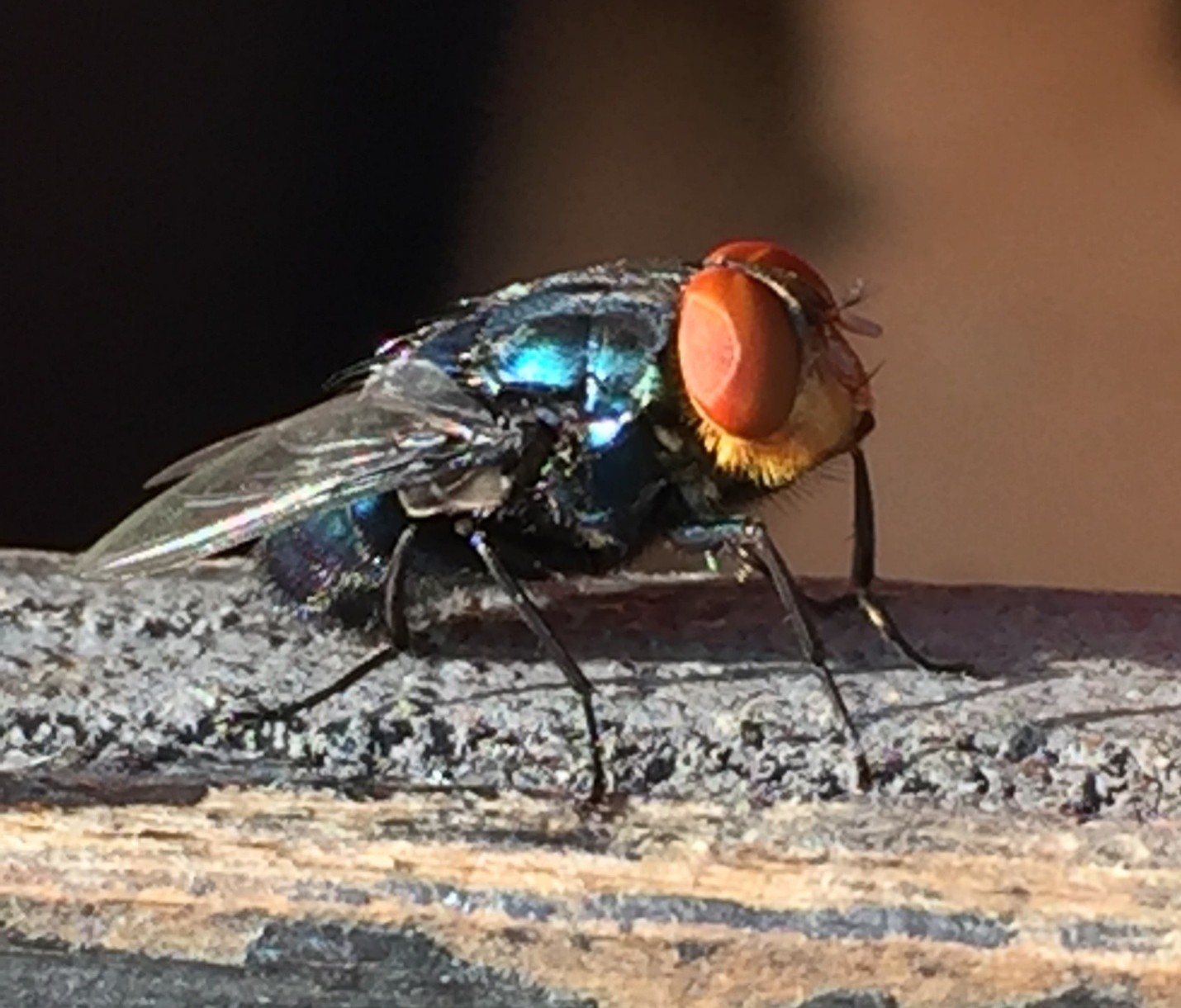
Figure 1B. Adult New World screwworm fly. Photo by the U.S. Department of Agriculture

Figure 2. New World screwworm life cycle. Photo by the U.S. Department of Agriculture
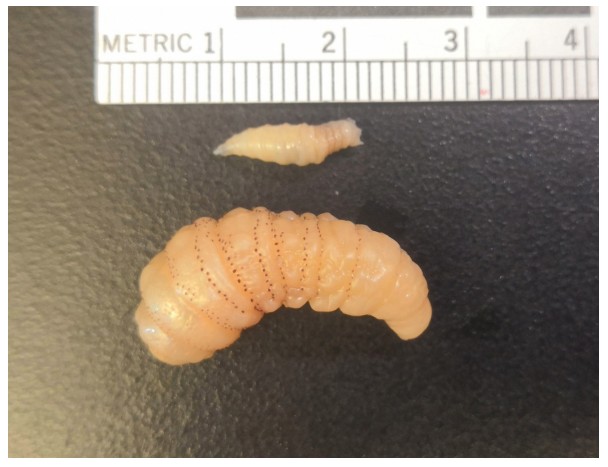
Figure 3. New World screwworm larva on top compared to bot fly larva on bottom. Photo by Mark Fox, U.S. Centers for Disease Control and Prevention
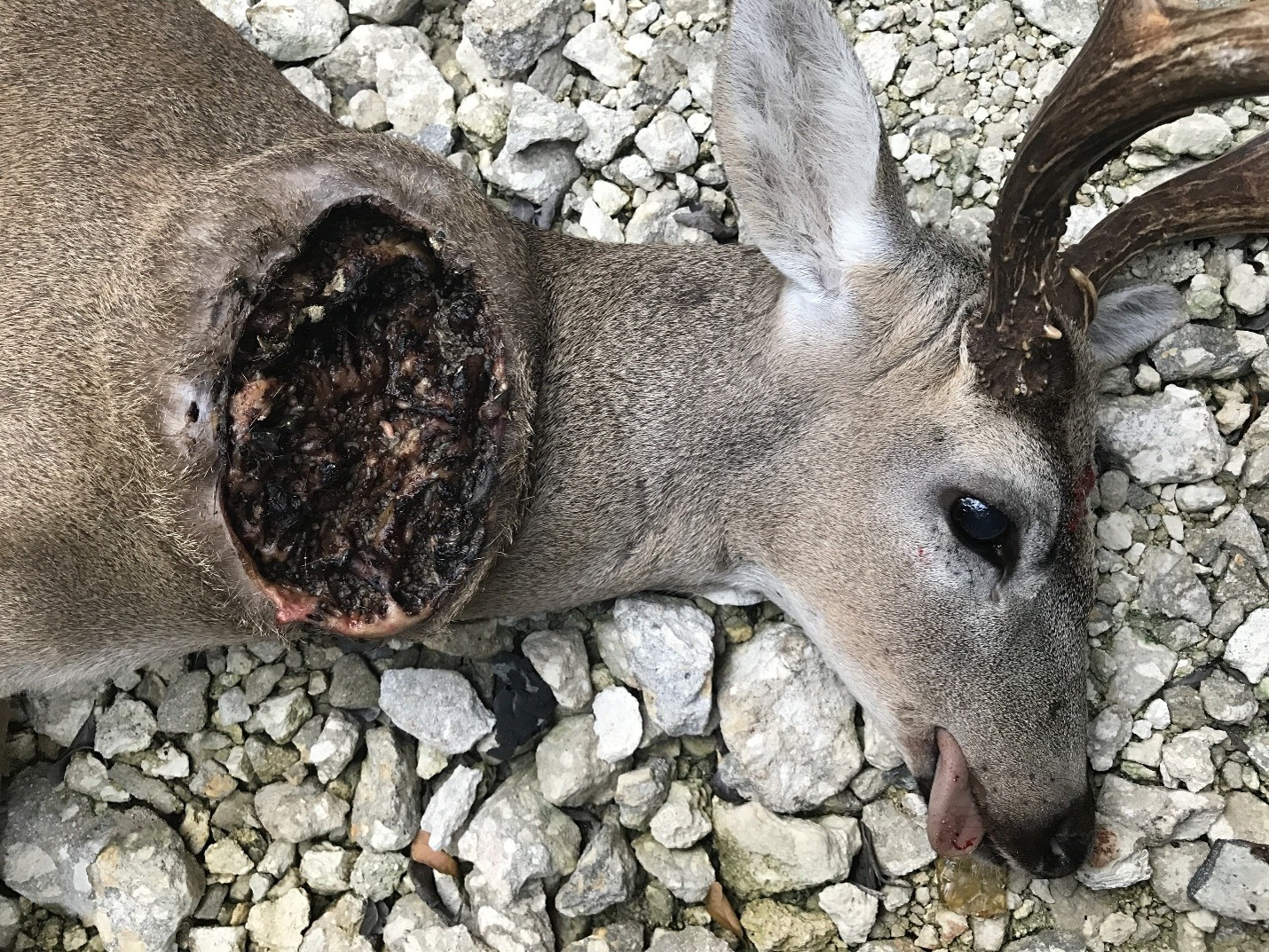
Figure 4. Deer infested with New World screwworm around the neck. Photo by the U.S. Department of Agriculture
Screwworm.gov | Unified Government Response To Protect the United States
New World Screwworm State Agencies Guidance
New World Screwworm: A Threat to Wildlife
Wildlife Monitoring and Management for New World Screwworm - Texas A&M AgriLife Extension Service
Florida Key Deer Abundance and Recovery Following New World Screwworm Infestation | Texas A&M NRI
P4061
7/17/26
The LSU AgCenter and LSU provide equal opportunities in programs and employment.