Search
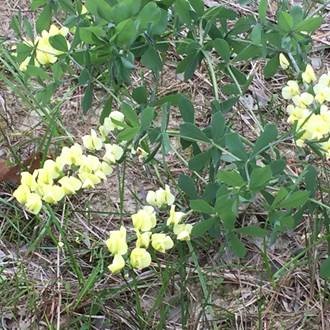
Baptisia, or Nuttall's wild indigo, a native legume.
Photo: Jimmy Cooley
Mr. Jimmy E. of DeRidder sent in an image to identify blooming plants.
This plant is Nuttall’s wild indigo, a native legume in the southeastern United State. According to the Lady Bird Johnson Wildflower Center, this plant is a perennial and is very important to native bees and butterflies. It is also considered “poisonous”, but it improves soil by fixing nitrogen.

Close up of a satsuma leaf with mite damage.
Photo: George Bass
George sent in his email with this note, “All the leaves are starting to curl, there a few blooms and new growth on some branches. What can I spray on the satsuma?”At first, AHA suspected an insect called a citrus leafminer (CLM). However, a closer examination of the leaves showed no tunneling by CLM. A search for other pests reveal that there are several species of mites that can cause damage foliage. The AgCenter’s Louisiana Insect Pest Management Guide advises home gardeners to use Malathion® or Vendex ® to treat for mites.
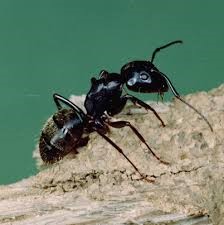
Carpenter ant worker.
Photo: US Forest Service
Cyndi asked for help with carpenter ants in this email, “Can you please tell me what to put around my house post to prevent these little pest from climbing their way into my home? I have put granules around each post, but they still climbing. Thanks for any input.”
Louisiana Insect Pest Management Guide provides some treatments specifically for carpenter ants:
Here are some other points for controlling carpenter ants:

Oak Phomopsis gall.
Photo: Melanie Bordelon
Melanie sent a question on behalf of her daughter, “Hey my daughter's two oak trees have these knots on them. What can I do and what is this?”
The galls in the images above resemble oak Phomopsis galls, and a fungus caused this condition. Trees with these galls tend to survive, and the Plant Health Clinic News from the University of Arkansas shares this information, “There is no chemical treatment for Phomopsis galls. Homeowners may prune them out and dispose of them, or choose to live with them. “Some hobby woodworkers might find a creative use for these galls because of the unusual grain in the wood.
If you want to contact Roots, Shoots, Fruits and Flowers, please send your questions and pictures to Keith Hawkins, Area Horticulture Agent (AHA), 337-463-7006 or Keith Hawkins. Also, please share the name of your parish.
“This work has been supported, in part, by the USDA National Institute of Food and Agriculture, Renewable Resources Extension Act Award, Accession Number 1011417.”